Death Valley
Overview
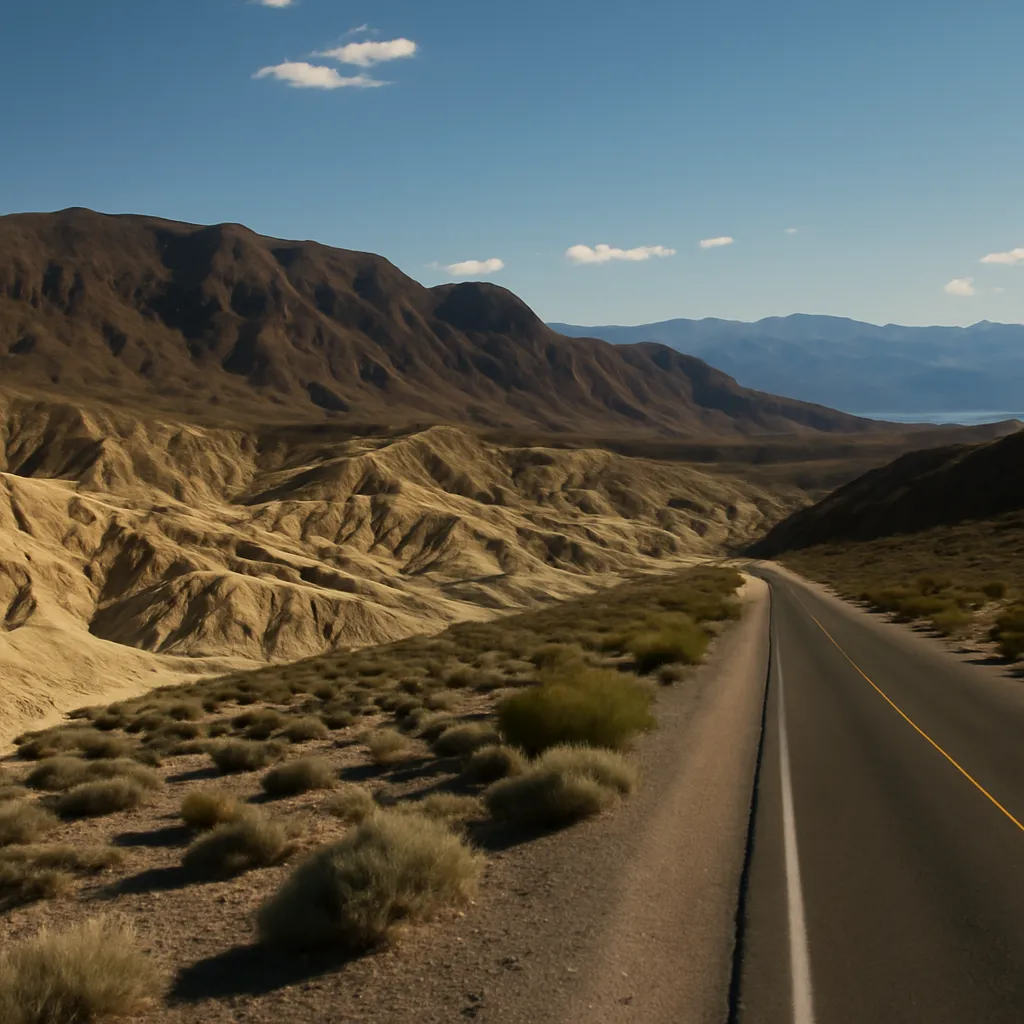
Death Valley, located in California, USA, is a mesmerizing desert landscape that captivates visitors with its extreme beauty and unique geological features. As one of the hottest places on Earth, it offers a stunning contrast of vast salt flats, rugged mountains, and colorful canyons, making it a must-visit destination for nature lovers and adventure seekers alike.
Key Highlights & Features
- Badwater Basin: The lowest point in North America at 282 feet below sea level.
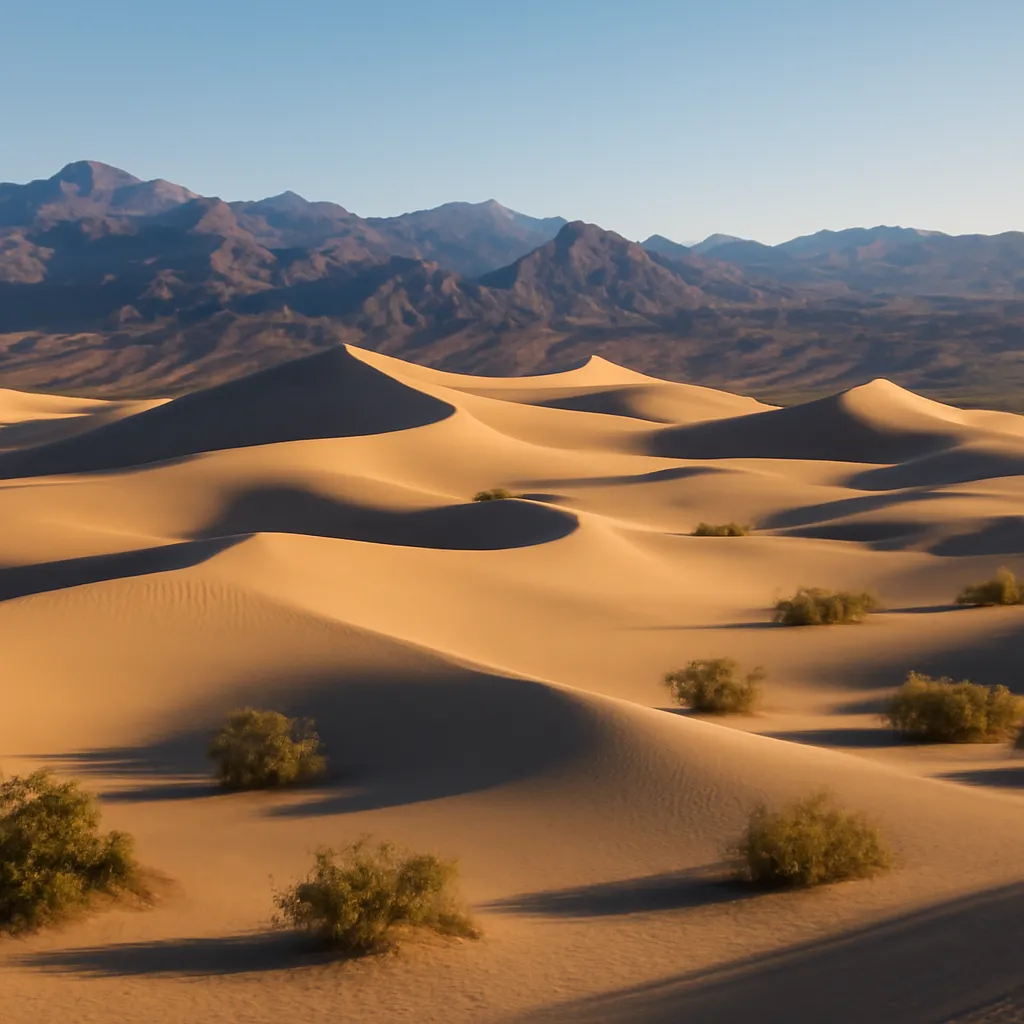
- Mesquite Flat Sand Dunes: Expansive dunes perfect for exploration and photography.
- Golden Canyon: A scenic hiking trail leading to breathtaking views.
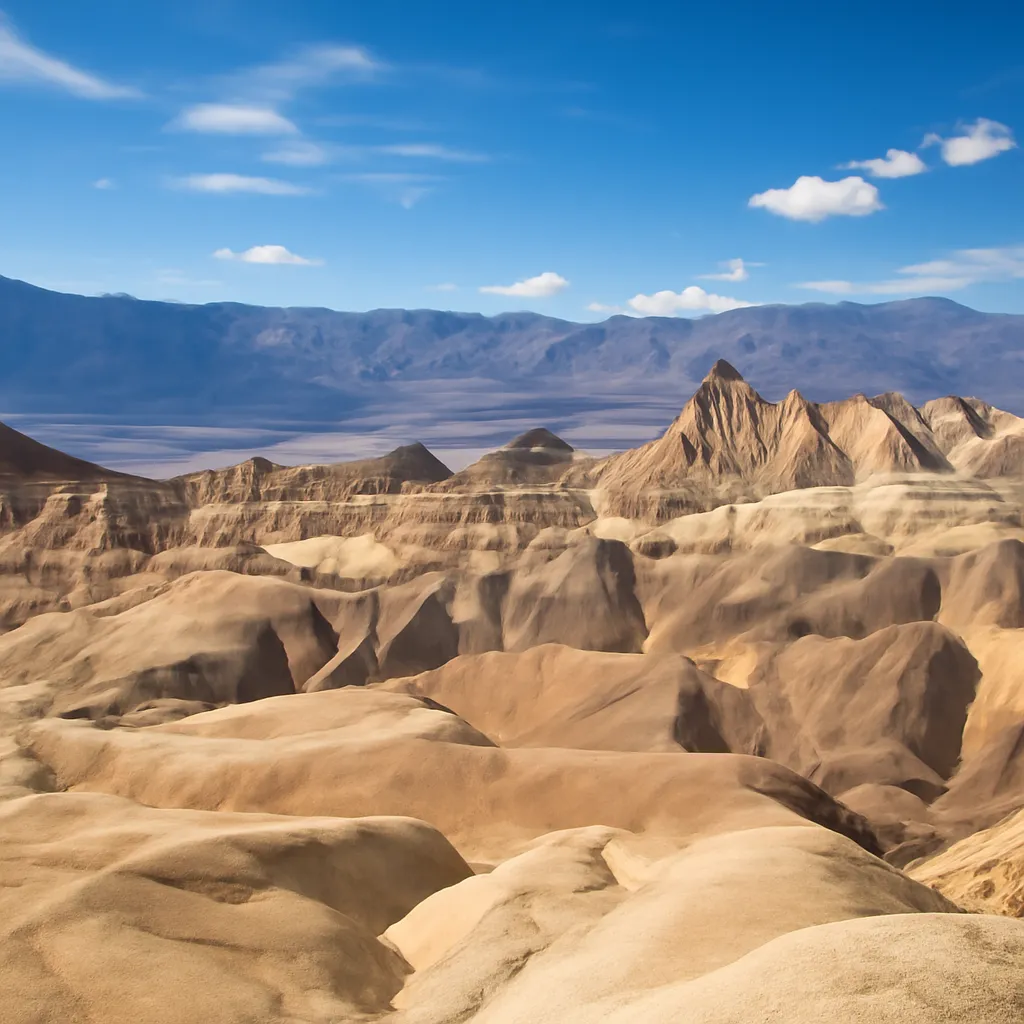
- Artist's Palette: A stunning display of colorful rock formations.
- Devil's Golf Course: A unique salt flat with jagged salt formations.
What Death Valley Is Known For
Death Valley is renowned for its extreme temperatures, with summer highs often exceeding 120°F. It is also famous for its diverse ecosystems, unique wildlife, and striking geological formations, including the iconic salt flats and vibrant canyons. The park's stark beauty and solitude provide a perfect backdrop for stargazing, making it a designated International Dark Sky Park.
Timings
Death Valley National Park is open year-round, 24 hours a day. However, visitor centers have specific operating hours, typically from 8 AM to 5 PM, with extended hours during peak seasons.
Tips for Visitors
- Stay hydrated and carry plenty of water, especially during hikes.
- Dress in layers to adapt to temperature changes throughout the day.
- Plan outdoor activities for early morning or late afternoon to avoid the heat.
- Download maps and information before entering, as cell service is limited.
Required Time
A visit to Death Valley can vary in duration. A day trip allows for a glimpse of key attractions, while a longer stay of 2-3 days enables deeper exploration of the park's diverse landscapes and hiking trails.
Restricted Items
- Fires and camping outside designated areas are prohibited.
- Collecting rocks, plants, or artifacts is not allowed.
- Pets are restricted to certain areas and must be on a leash.
More About Death Valley
Death Valley is not only a geological wonder but also rich in history, with remnants of mining operations and ghost towns that tell the story of early settlers. The park's diverse wildlife includes bighorn sheep, coyotes, and various bird species, making it a fascinating destination for wildlife enthusiasts.
Architecture of Death Valley
While Death Valley is primarily known for its natural landscapes, remnants of historic structures, such as mining camps and ghost towns, reflect the human history intertwined with this harsh environment.
Best Time to Visit
The ideal time to visit Death Valley is during the cooler months, from October to April, when temperatures are more manageable for outdoor activities and exploration.
How to Reach
Death Valley is accessible by car, with the nearest major city being Las Vegas, approximately 2 hours away. The park has several entrances, with the most popular being from the California side via Highway 190.
Nearby Tourist Spots
- Furnace Creek: The main hub for visitor services and attractions.
- Scotty's Castle: A historic mansion with guided tours available.
- Zabriskie Point: A viewpoint offering stunning sunrise and sunset vistas.
FAQs
- Is it safe to visit Death Valley in summer? Yes, but extreme caution is advised due to high temperatures. Plan activities for early morning or late evening.
- Are there accommodations within Death Valley? Yes, there are campgrounds and lodges available, but reservations are recommended, especially during peak season.
- Can I hike in Death Valley? Absolutely! There are numerous trails ranging from easy walks to challenging hikes.
- What wildlife can I see in Death Valley? Look out for bighorn sheep, desert tortoises, and various bird species, particularly in the cooler months.
- Is there an entrance fee for Death Valley National Park? Yes, there is an entrance fee per vehicle, which is valid for seven days.