Mackinac Bridge
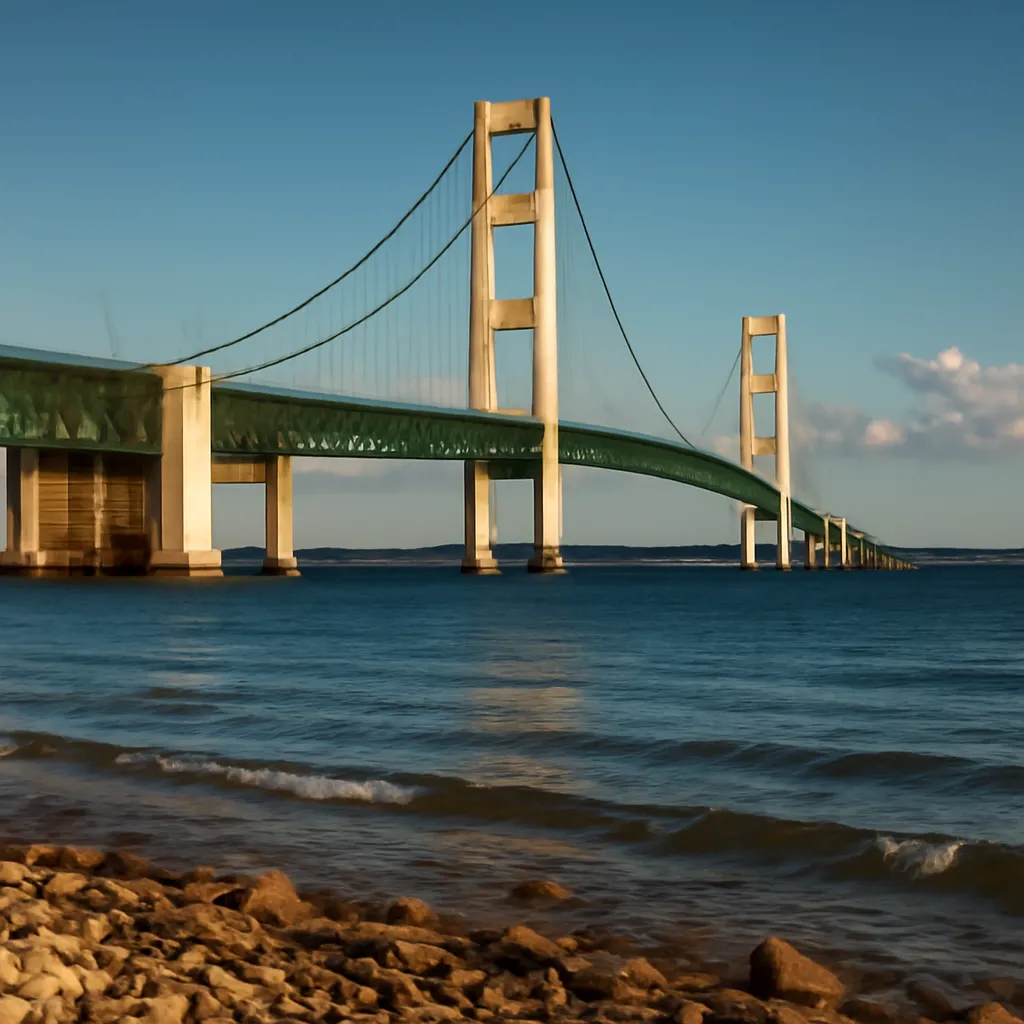
Mackinac Bridge: A Marvel of Engineering and Scenic Beauty
Overview
The Mackinac Bridge, an iconic symbol of Michigan, spans the strait between Lake Huron and Lake Michigan, connecting the Upper and Lower Peninsulas. This engineering marvel not only serves as a vital transportation link but also offers breathtaking views and a rich historical narrative that captivates visitors from around the globe.
History of the Mackinac Bridge
Constructed between 1954 and 1957, the Mackinac Bridge was a groundbreaking project that transformed travel in Michigan. Before its completion, the only way to cross the strait was by ferry, which was often subject to weather delays. The bridge was designed by David B. Steinman, a renowned engineer, who envisioned a suspension bridge that would withstand the region's harsh weather conditions.
On November 1, 1957, the bridge officially opened to traffic, becoming the longest suspension bridge in the Western Hemisphere at that time. The bridge has since become a significant landmark, representing not only a feat of engineering but also the unity of Michigan’s communities.
Architectural Significance
The Mackinac Bridge stretches an impressive 26,372 feet (about 5 miles) and boasts a main span of 3,800 feet. Its two towering pylons reach a height of 552 feet, making them a striking feature against the backdrop of the Great Lakes. The bridge's design incorporates a unique Art Deco style, characterized by its sweeping lines and elegant curves.
The bridge's construction utilized over 1 million square feet of concrete and 42 million pounds of steel. Its distinctive golden hue was chosen to harmonize with the natural landscape and to enhance visibility in foggy conditions. The engineering techniques employed in the bridge's construction have influenced suspension bridge design worldwide.
Visitor Highlights
Visitors to the Mackinac Bridge can enjoy a variety of experiences that highlight both the bridge and its surroundings:
- Scenic Views: The bridge offers stunning vistas of the Great Lakes and surrounding landscapes. The view from the bridge, especially at sunrise or sunset, is a photographer's dream.
- Mackinac Bridge Visitor Center: Located at the southern end of the bridge, this center features exhibits on the bridge's history, engineering, and construction. It also offers panoramic views of the bridge and the straits.
- Walking Events: Each year, the bridge hosts a Bridge Walk on Labor Day, where thousands of participants walk across the span, enjoying the fresh air and community spirit.
- Nearby Attractions: The bridge is a gateway to the beautiful Mackinac Island, famous for its horse-drawn carriages and absence of motor vehicles, as well as the scenic landscapes of the surrounding state parks.
Cultural Importance
The Mackinac Bridge is not just a transportation route; it is a cultural icon for Michiganders. It symbolizes the connection between two peninsulas and serves as a reminder of the state's rich history and heritage. The bridge is often featured in local art, literature, and festivals, celebrating its significance in the lives of residents and visitors alike.
Moreover, the bridge plays a crucial role in the economy of the region, facilitating tourism and commerce. Its presence has led to the development of various recreational activities and events that enhance the local culture.
Best Time to Visit
The ideal time to visit the Mackinac Bridge is during the late spring through early fall (May to October). During these months, the weather is typically mild, and the natural beauty of the area is at its peak. Autumn, in particular, offers a spectacular display of fall foliage, making it a picturesque time for photography enthusiasts.
For those interested in participating in the annual Bridge Walk, planning a visit around Labor Day is essential. This event draws thousands of participants and offers a unique opportunity to experience the bridge on foot.
Travel Tips
- Plan Ahead: If you are visiting during peak tourist season, consider booking accommodations in advance, especially if you plan to stay on Mackinac Island or in nearby towns.
- Weather Preparedness: The weather can change rapidly in this region, so dress in layers and be prepared for both sunny and rainy conditions.
- Explore Beyond the Bridge: Don’t miss the chance to explore nearby attractions, such as Fort Mackinac on Mackinac Island and the scenic trails in Straits State Park.
- Respect the Environment: While enjoying the natural beauty, be sure to follow local guidelines to protect the ecosystem and keep the area pristine for future visitors.
Conclusion
The Mackinac Bridge stands as a testament to human ingenuity and the beauty of Michigan’s landscapes. Whether you’re crossing it by car, participating in the Bridge Walk, or simply admiring it from afar, the bridge offers a unique experience that combines history, culture, and stunning natural beauty. Plan your visit today and discover the wonders of this iconic landmark.